
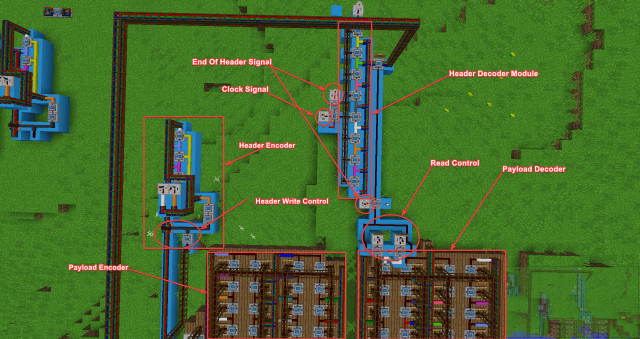
This may seem absolutely mad at a first look and it probably will still be mad at the end of this blog post. One of the first problems that comes to fruition is the fact that you are limited to 5hz clock at best. That’s 200ms intervals. There isn’t much that you can do with 5bps(bits per second). In the real world, the limitations are not nearly as severe. The best solution we found was just to add more data cables(16 of them) which comes with its advantages and disadvantages but mostly advantages. First of all we’re able to send up to 80bps or 8 bytes per second with the new system. But with this, comes some new challenges. For instances, we need to use far more wireless channels for communication which can be a hassle sometimes.
The Packet Model
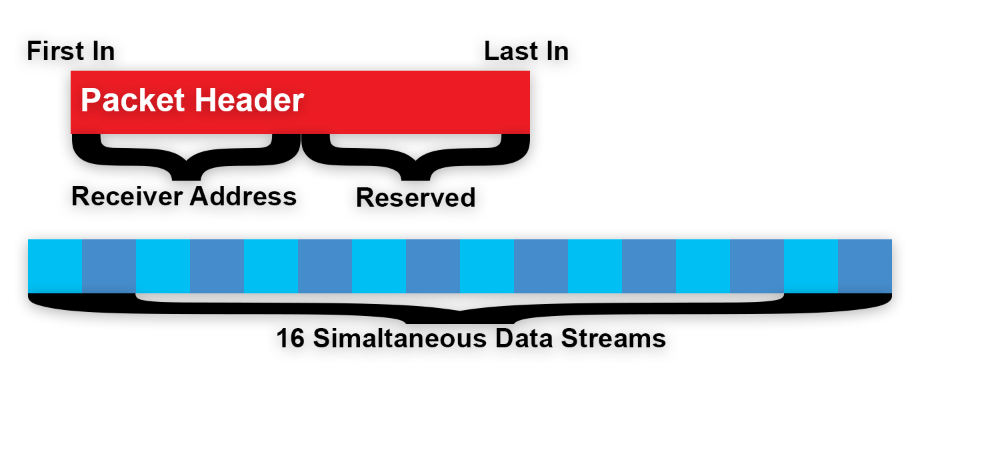
In the beginning of this venture of creating a internet from scratch in Minecraft we started by simply broadcasting the payloads without any traffic control. Compared to a normal TCP/IP packet, this packet looks severely lacking in features but the idea was to reduce the amount of overhead in a packet because as it stands right now, the header takes 1.6 seconds to send and the payload takes 3.2 seconds to send. The amount of time it would take to send a TCP packet wouldn’t be worth all the nice features. You may have noticed that there is reserved space in the packet and this is for future expansion of the packet such as designated flags for certain applications. In the future, there will be a actual internet, besides the global packet control system, everything is peer to peer which has its disadvantages.


 jmhart blog
Leave a comment